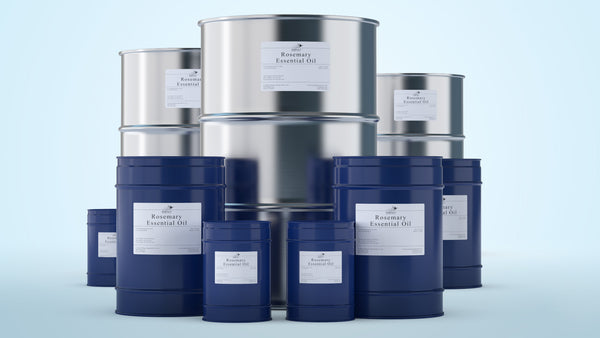
The global essential oils market is projected to exceed $15 billion in 2026, with the B2B segment accounting for the majority of volume. For manufacturers, contract formulators, and private label brands sourcing bulk essential oils, that growth brings opportunity and risk in equal measure. Adulteration remains widespread, supply chain disruptions can stall production lines, and a single failed batch can trigger costly reformulations or regulatory holds.
Choosing the right supplier is not a purchasing decision. It is a quality assurance and risk management decision that affects every product you ship. This guide provides a structured evaluation framework that procurement teams, product developers, and brand owners can use to assess bulk essential oil suppliers against the criteria that actually determine long-term reliability.
Why Supplier Selection Matters More Than Price Per Kilogram
In bulk essential oil procurement, the cheapest option is rarely the most cost-effective. A supplier offering below-market pricing on lavender or peppermint oil may be masking adulteration with synthetic linalool or menthol, cutting with carrier oils, or sourcing from regions with inconsistent quality controls. The downstream costs of these shortcuts are significant: failed stability testing, consumer complaints, regulatory action, and damaged brand credibility.
Understanding the supply chain structure helps buyers avoid these risks. There are three main types of essential oil suppliers operating in the B2B market:
-
Traders buy and resell oils without direct involvement in production. They may not perform independent quality testing or have visibility into sourcing practices.
-
Distributors hold inventory from multiple sources and offer convenience, but may lack the technical expertise to support complex formulation requirements.
-
Manufacturers own or operate distillation and processing equipment, maintain direct relationships with growers, and control quality from raw material intake through finished product. Working directly with an essential oil manufacturer reduces the number of intermediaries and the risk of adulteration at each handoff.
For procurement teams evaluating essential oil wholesale options, prioritising manufacturers over traders is the single most effective way to reduce supply chain risk.
Quality Assurance and Testing: What to Demand From Bulk Essential Oil Suppliers
Quality documentation is the foundation of any supplier relationship. The best essential oil suppliers provide batch-specific analytical data as standard practice, not as a special request. Here is what to evaluate.
GC/MS Testing
Gas Chromatography-Mass Spectrometry (GC/MS) is the industry gold standard for verifying essential oil composition. A GC/MS report identifies every chemical constituent in a sample and quantifies its percentage. This allows buyers to confirm that an oil meets the expected chemical profile for its species and origin.
What to look for in a GC/MS report:
-
Key marker compounds at expected percentages (e.g., 1,8-cineole in eucalyptus at 60-75%, linalyl acetate in lavender at 25-45%)
-
Absence of synthetic additives or adulterants that would not appear in a naturally distilled oil
-
Batch-specific testing, not a generic report reused across shipments
-
In-house or accredited third-party laboratory performing the analysis
Suppliers who cannot provide batch-specific GC/MS reports should be disqualified immediately. A single generic report applied to all inventory is a red flag indicating the supplier either does not test consistently or is masking variability between batches.
Certificates of Analysis and Safety Data Sheets
Beyond GC/MS, every shipment should include:
-
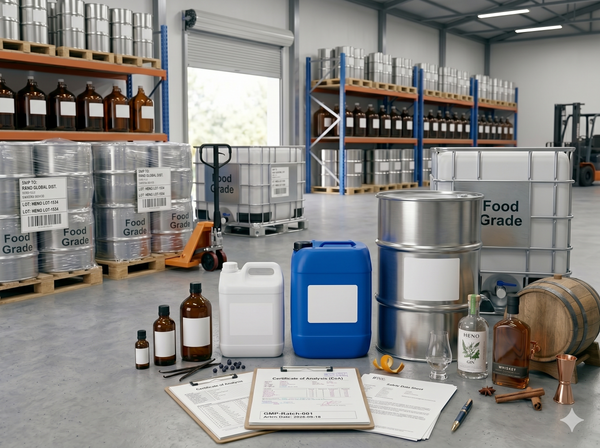
Certificate of Analysis (CoA): Confirms the oil meets agreed specifications for physical properties such as density, refractive index, and optical rotation, along with chemical composition and microbiological limits
-
Safety Data Sheet (SDS): Provides hazard classification, handling instructions, and regulatory information required for workplace compliance and downstream product labelling
Additional testing to request for critical applications includes heavy metals analysis, pesticide residue screening, and allergen profiling, particularly for oils destined for personal care or food-grade formulations.
Red Flags in Testing Claims
Be wary of suppliers who rely on proprietary purity standards with no independent verification, who provide certificates from unaccredited laboratories, or who cannot explain their testing methodology when asked. Transparency in quality assurance is not optional. It is a direct indicator of whether a supplier operates at a professional grade.
Certifications and Regulatory Compliance
Certifications serve as independent verification that a supplier operates within established quality and safety frameworks. Not every certification is relevant to every buyer, but understanding what each one covers helps procurement teams match supplier credentials to their specific compliance requirements.
Manufacturing and Quality System Certifications
-
ISO 9001 / ISO 22716: Confirms the supplier operates a documented quality management system. ISO 22716 is specific to cosmetic GMP and is increasingly expected by personal care brands.
-
GMP (Good Manufacturing Practices): Ensures the production facility meets sanitation, equipment maintenance, and process control standards mandated by the FDA.
-
FDA Registration: Required for facilities manufacturing or processing products regulated by the FDA, including essential oils used in food, drugs, or cosmetics.
Product and Sourcing Certifications
-
USDA Organic: Verifies the oil was produced without synthetic pesticides, herbicides, or fertilisers. Required for any product making organic claims in the US market.
-
Kosher: Relevant for food-grade applications and products marketed to kosher-observant consumers.
-
Fair for Life / Fair Trade: Demonstrates ethical sourcing practices and equitable compensation for growers. Increasingly important for brands with sustainability commitments.
Regulatory Frameworks for Essential Oil Wholesale Buyers
-
IFRA (International Fragrance Association): Sets usage limits for fragrance ingredients based on safety assessments. Suppliers serving the fragrance and personal care sectors must provide IFRA certificates of conformity.
-
REACH: Mandatory for any chemical substance imported into or manufactured in the European Union above one tonne per year. Buyers selling into EU markets must confirm their supplier's REACH compliance.
-
GRAS (Generally Recognized as Safe): An FDA designation relevant to essential oils used in food flavouring and processing.
When evaluating organic essential oil suppliers or any supplier claiming certifications, request copies of current certificates and verify their validity directly with the issuing body. Expired or unverifiable certifications are a disqualifying risk.
Supply Chain Reliability and Production Capacity
A supplier's ability to deliver consistently matters as much as the quality of any individual batch. Evaluating supply chain reliability requires looking beyond the product catalogue to assess the infrastructure behind it.
Production Scale
Facility size, equipment capacity, and daily output determine whether a supplier can meet your volume requirements without lead time delays. A supplier operating a purpose-built production facility with dedicated distillation, blending, and filling lines will handle large orders more reliably than a small-batch operation scaling beyond its capacity.
Ask potential suppliers:
-
What is your monthly or annual production capacity for the specific oils you need?
-
Do you maintain buffer stock, or is production made to order?
-
What is your standard lead time from order to shipment?
Flexibility and Scalability
Not every buyer needs the same volume structure. Emerging brands testing new formulations may need small initial quantities, while established manufacturers require recurring wholesale bulk essential oils shipments on a fixed schedule. The best suppliers accommodate both ends of the spectrum.
Key flexibility indicators:
-
No minimum order quantity (MOQ) or low MOQ thresholds for initial orders and product testing
-
Long-term supply contracts with locked pricing and guaranteed allocation for high-volume buyers
-
Recurring wholesale programs that simplify reordering and reduce administrative overhead
Value-Added Services
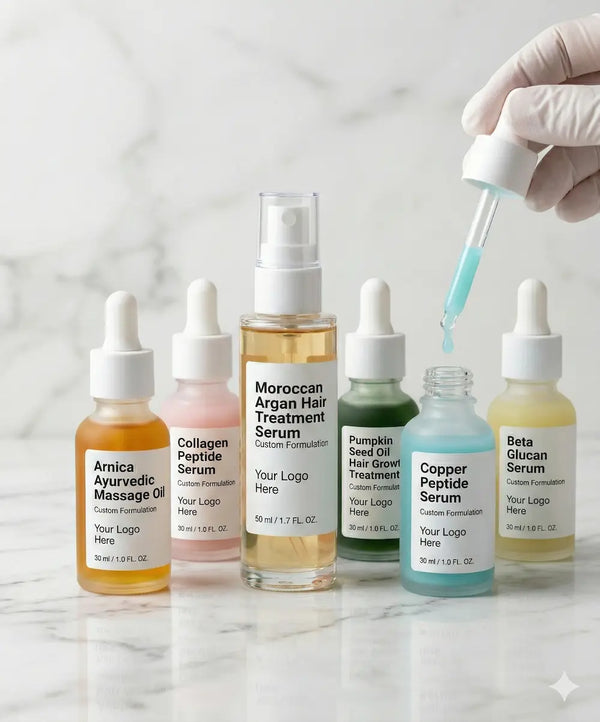
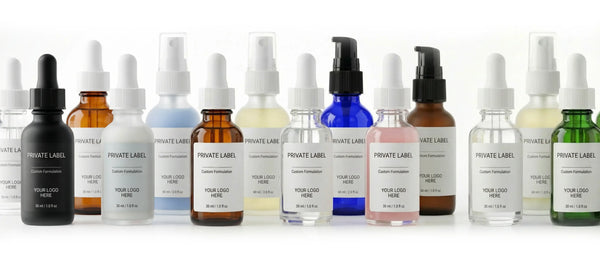
Suppliers offering private label and contract manufacturing services provide additional value for brands that want to bring products to market without investing in their own production infrastructure. These services can include custom blending, filling, labelling, and packaging at scale, reducing the number of vendors a buyer needs to manage.
How to Vet a Supplier Before Committing to a Bulk Order
Before placing a production-scale order with any new bulk essential oil supplier, run a structured vetting process that tests their capabilities against your requirements.
Step 1: Request Samples and Documentation
Order samples of the specific oils you intend to purchase. Evaluate them against your formulation requirements and request the full documentation package: GC/MS report, CoA, and SDS for each sample batch. Compare the documentation against your internal specifications or pharmacopeial standards.
Step 2: Assess Technical Expertise
A supplier's team should be able to answer detailed questions about sourcing, distillation methods, and chemical composition. Suppliers with in-house chemists, PhD-level staff, or dedicated quality assurance teams demonstrate a level of technical capability that traders and brokers typically cannot match. This is what separates a true essential oil manufacturer from a reseller.
Step 3: Verify Testing Infrastructure
Ask whether GC/MS testing and quality analysis are performed in-house or outsourced. In-house testing indicates a higher level of investment in quality control and faster turnaround on batch verification. Outsourced testing is not disqualifying but adds lead time and reduces the supplier's direct control over analytical results.
Step 4: Evaluate Traceability
Can the supplier trace a finished oil back to its botanical source, harvest date, and distillation batch? Full traceability is increasingly required by regulatory bodies and large retail buyers. It is also a strong indicator of supply chain integrity.
Step 5: Test Responsiveness
Place a trial order and evaluate the end-to-end experience: order confirmation speed, shipping accuracy, packaging quality, and responsiveness to questions or issues. A supplier's behaviour on a small order is a reliable predictor of their performance on large ones.
Why Manufacturers Like HBNO Meet These Criteria
HBNO (IL Health & Beauty Natural Oils Co., Inc.) is a US-based essential oil manufacturer that operates a 100,000 sq ft production facility in Chico, California. Their infrastructure and certifications directly address the evaluation criteria outlined in this guide:
-
In-house quality control: HBNO performs GC/MS testing on all products using world-class analytical equipment, staffed by PhD-level chemists. Every shipment includes a CoA and SDS.
-
Comprehensive certifications: ISO, GMP, FDA registered, USDA Organic, Kosher, and Fair for Life certified. Compliant with REACH, IFRA, and food safety standards.
-
Flexible ordering: No minimum order quantity, making HBNO accessible to brands at every stage of growth, from initial formulation testing to full-scale production runs.
-
Private label and contract manufacturing: 250,000 units per day production capacity across oils, formulations, and packaging.
-
Global shipping: HBNO ships to North America, Europe, Asia, and Oceania, with long-term supply contracts and recurring wholesale programs available.
-
Broad product range: Bulk essential oils, carrier oils, fragrance oils, absolutes, oleoresins, and hydrosols, all produced under the same quality management system.
Conclusion
Selecting a bulk essential oil supplier is a decision that directly impacts your product quality, regulatory standing, and production continuity. Price matters, but it should be evaluated alongside quality documentation, certifications, production capacity, and the supplier's ability to scale with your business.
Use the evaluation framework in this guide to compare suppliers systematically. Request batch-specific GC/MS reports and CoAs. Verify certifications. Test with a sample order before committing to volume. The suppliers who meet these criteria consistently are the ones worth building a long-term sourcing relationship with.
Ready to evaluate a supplier that meets every criterion on this list? Request a quote or sample from HBNO and see how a US-based essential oil manufacturer with full analytical capabilities and no minimum order requirement can support your next production run.