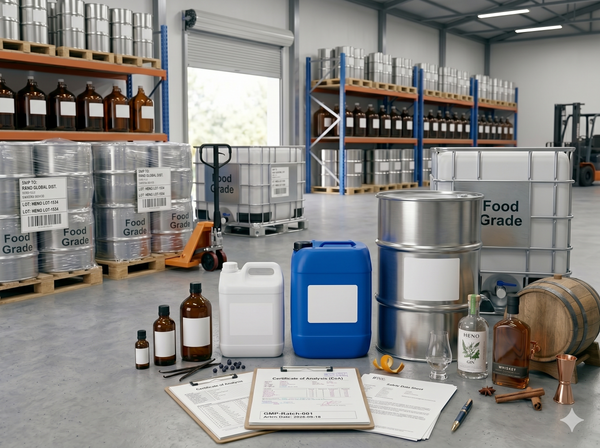
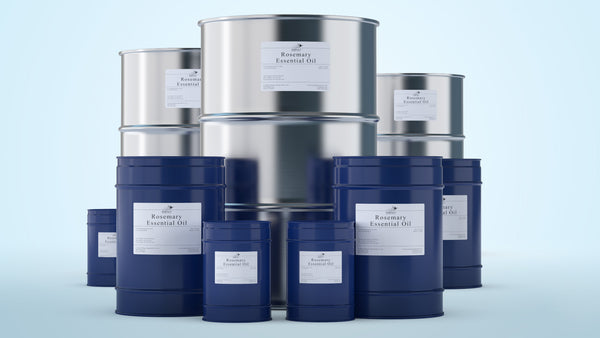
Most formulation problems don't begin in the lab. They begin with the wrong essential oil. We have seen it happen more times than I care to count. A formulation chemist builds a perfect emulsion, stable, silky, effective. Then the team switches to a new bulk supplier for lavender oil to cut costs. Three weeks into stability testing, the cream discolors, the scent turns metallic, and the pH drifts out of specification.
The problem isn't the chemist. The problem is oxidation, batch inconsistency, and a COA that doesn't reflect what's actually in the drum.
In the B2B world, an essential oil is not a scent. It's a complex chemical raw material. The moment you treat it like a fragrance ingredient, your brand will face skin irritation complaints, failed stability tests, and regulatory hurdles that cost far more than the 'savings' from the cheaper supplier.
This guide is built to help you navigate the technical reality of sourcing essential oils for professional cosmetic production and to introduce you to the 15 core oils your formulation team will reach for most.
|
Quick Summary What are essential oils in formulation?.. Why use them? soothing, and sebum-balancing properties plus clean-be Oncentrated volatile plant extracts that provide natural fragrance and aromatic character to your formulationsauty marketing value. What to verify before sourcing? GC-MS report, IFRA compliance certificate, SDS, COA, and batch-to-batch consistency documentation. |
What Are Essential Oils in Cosmetic Formulation?
Essential oils are concentrated aromatic compounds extracted from plant material through steam distillation, cold pressing, or CO₂ extraction. In cosmetic science, they serve as both active ingredients and natural fragrances.
Because they contain potent chemical constituents terpenes, phenols, aldehydes, esters they must be used within strict dermal limits to ensure consumer safety and product stability. They are not interchangeable with synthetic fragrance, and they are not forgiving of sloppy sourcing.
Why Essential Oils Matter in Cosmetic Formulation
Essential oils are the bridge between industrial chemistry and natural appeal. Three reasons they remain irreplaceable in professional cosmetic R&D:
- Natural Fragrance Alternative. Consumers are increasingly wary of 'Parfume' and synthetic musks. Essential oils let you label a product with 'Natural Fragrance' or list the botanical INCI name a transparent signal that clean-beauty buyers actively seek.
- Functional Properties. Many essential oils offer more than just scent. Tea Tree adds a crisp, fresh aroma valued in personal care formulations. Rosemary contributes a bright, herbaceous note that blends beautifully with other botanicals. Frankincense provides a rich, resinous fragrance ideal for premium skincare and body products. Peppermint delivers a distinctive cooling aroma and invigorating sensory experience that is difficult to replicate with synthetics.
- Marketing Value. Seeing Lavandula angustifolia on an INCI deck adds a premium signal that synthetic linalool cannot match. In private label and clean beauty segments, botanical ingredients are a core part of the brand story.
15 Essential Oils Used in Cosmetic Formulation Buyer's Reference
Every formulator has a core kit. The following 15 oils represent the highest-frequency ingredients in professional cosmetic and personal care production.
-
Peppermint Essential Oil (Mentha piperita) CAS 8006-90-4
Part of every professional formulator’s core kit, Peppermint Essential Oil adds a fresh, crisp aroma to lip balms, creams, shampoos, and body care formulations. Sourced from Indian peppermint for consistent menthol fragrance, it blends well in oil- and water-based systems when properly solubilized. Recommended dilution: 0.1–1% for leave-on products; higher for rinse-off formulations. Always check IFRA limits per application type. GRAS-listed (FEMA 2848) for flavoring use.
→ Buy Peppermint Essential Oil in Bulk
-
Lavender 40/42 Essential Oil
Primary use: Perfumes, cosmetics, soaps, candles, and body care where batch-to-batch fragrance consistency is non-negotiable. Standardized to 40% linalool and 42% linalyl acetate the industry standard for formulators who need a reliable lavender aroma without botanical variation. Not for ingestion. Note: this is a blended, standardized grade. Do not substitute for true Lavandula angustifolia where therapeutic or botanical integrity claims are made.
→ Buy Lavender 40/42 Essential Oil in Bulk
-
Rosemary Essential Oil (Rosmarinus officinalis)
Ideal for body care formulations and as a fragrant addition to personal care products. Rosemary can also serve as a natural antioxidant in the oil phase to help maintain product freshness. Chemotype ct. cineole is most common for personal care blends, while ct. camphor requires careful consideration for leave-on formats.
→ Buy Rosemary Essential Oil in Bulk
-
Eucalyptus Globulus Essential Oil
Eucalyptus Globulus Essential Oil offers a crisp, clean aroma that works well in personal care, home care, and air-care formulations. HBNO provides this oil in bulk for professional use.
Formulator Note: Exercise caution when blending for products intended for children; verify age-appropriate labeling in your formulations.
→ Buy Eucalyptus Globulus Essential Oil in Bulk
-
Tea Tree Essential Oil (Melaleuca alternifolia
Tea Tree Essential Oil offers a fresh, crisp aroma commonly used in personal care and body care formulations. It is sensitive to oxidation, so professional suppliers provide nitrogen-flushed, dark-glass packaging to preserve quality. Verify terpinen-4-ol content per ISO 4730. Recommended dilution: 0.5–5%, depending on formulation type. HBNO provides COA, SDS, and allergen declarations with every shipment.
→ Buy Tea Tree Essential Oil in Bulk
-
Lemongrass Essential Oil (Cymbopogon flexuosus)
Primary use: Deodorants, clarifying toners, room sprays, and cleaning formulations. Recognized for its refreshing aromatic profile in cleaning, air-care, and cosmetic formulations. Citral content (the key active) is a known skin sensitizer IFRA leave-on limits are strict. Confirm citral percentage and oxidation date on every batch. Suitable for large-scale manufacturing across personal care, home care, and industrial cleaning.
→ Buy Lemongrass Essential Oil in Bulk
-
Frankincense Oil Serrata (Boswellia serrata)
Frankincense Oil Serrata is prized for its rich, balsamic fragrance and is perfect for luxury perfumes, artisan blends, and incense. This grade is more cost-accessible than Boswellia sacra, but always confirm the specific species on the COA.Both are available in bulk with COA, SDS, and compliance documentation.
→ Buy Frankincense Essential Oil in Bulk
-
Neossance Squalane
Not a traditional essential oil but a critical carrier and emollient in modern cosmetic formulation. Neossance Squalane is a premium, plant-derived ingredient produced from renewable sugarcane feedstock through an advanced biotechnology fermentation process manufactured in the USA and available from HBNO Bulk. It mimics the skin's natural squalene, delivering lightweight moisturization without greasiness. ECOCERT-approved, non-GMO, cruelty-free, and sustainably sourced. Shelf life: approximately 3 years under proper storage. Highly resistant to oxidation compared to unsaturated emollients. Ideal for serums, sunscreens, and high-performance moisturizers.
→ Buy Neossance Squalane in Bulk
-
Roman Chamomile Essential Oil (Anthemis nobilis)
Primary use: Sensitive skin formulations, baby care, and calming serums. Premium ingredient Roman chamomile is costlier than German chamomile and has a distinctly different chemical profile. Typical formulation range: 0.1–0.5% in leave-on products. Always verify the botanical name on the COA suppliers occasionally substitute German chamomile (Matricaria chamomilla) without disclosure. HBNO provides full documentation per batch.
→ Buy Roman Chamomile Essential Oil in Bulk
-
Cinnamon Bark Essential Oil (Cinnamomum zeylanicum) CAS 8015-91-6
Primary use: Warming massage oils, spiced body washes, and oral care formulations. High cinnamaldehyde and eugenol content make this one of the most potent sensitizers in the essential oil category IFRA leave-on limits are among the strictest. Primarily used in wash-off formats at very low concentrations. Never assume 'fragrance dosage' applies here: always check IFRA limits for your specific product category before formulating.
→ Buy Cinnamon Bark Essential Oil in Bulk
-
Lavender Essential Oil (Lavandula angustifolia)
Primary use:universal fragrance in serums, face creams, and body care. Also known as 'True Lavender' steam-distilled from Lavandula angustifolia flowers. Used in cosmetics, soaps, candles, and cleaning products. Dilution: 0.5–2% in body care; lower for face and sensitive skin. Stability is high but oxidation risk increases with improper storage store in amber glass away from light.
→ Buy Lavender Essential Oil in Bulk
-
Patchouli Dark Essential Oil (Pogostemon cablin) CAS 8014-09-3
Primary use: Premium perfumery, earthy body care, and fixative blending. The 'Dark' grade is aged valued for its deep, rich, earthy-sweet aroma and colort. Perfume-grade quality: suitable for fragrance-forward body butters, deodorants, and artisan blends. For skincare where product discoloration is a concern, a lighter or redistilled grade is preferable.
→ Buy Patchouli Dark Essential Oil in Bulk
-
Peppermint Essential Oil Mentha Arvensis (Cornmint)
Primary use: cooling gels, oral hygiene, cosmetics, and room sprays. Higher menthol content than Mentha piperita, making it the preferred industrial source for menthol-rich formulations. Used across deodorizers, lip balms, soaps, body sprays, and laundry products. COA, SDS, and compliance documentation available per batch.
→ Buy Peppermint Cornmint Essential Oil in Bulk
-
Orange Essential Oil (Citrus sinensis)
Primary use: Body washes, lotions, and room sprays for its fresh, universally appealing scent profile. The most widely used citrus oil in personal care. Cold pressed grade carries phototoxicity risk in leave on applications use steam-distilled for leave-on formats and verify limonene content per batch. Limonene oxidizes and becomes a sensitizer: always confirm oxidation date on the COA.
→ Buy Orange Essential Oil in Bulk
-
Organic Rosemary Essential Oil
Primary use: Clean beauty formulations, EU Ecolabel-certified products, and USDA organic personal care. This is the certified organic grade distinct from conventional rosemary oil in that it requires full pesticide residue and heavy metals testing in addition to standard GC-MS. Commands a premium justified by organic certification documentation. Always request the current organic certificate a label claim alone does not satisfy regulatory or retailer requirements.
→ Buy Organic Rosemary Essential Oil in Bulk
Safety, IFRA, and Regulatory Compliance
You cannot formulate professionally without the International Fragrance Association (IFRA) standards. IFRA sets maximum usage levels for essential oils based on product category Category 4 is leave-on skin products, Category 9 covers rinse-off formats. If a bulk essential oil supplier cannot provide a current IFRA certificate, do not buy from them.
Regulatory Checklist for B2B Formulators
- Dermal Limits: 'Natural' does not mean unlimited. Cinnamon Bark has limits as low as 0.07% in leave-on face products. Lemongrass citral limits are similarly strict. Check every oil, every category.
- Allergen Labeling: Under EU Cosmetics Regulation and US MoCRA, you must declare allergens like Linalool, Limonene, and Citral when they exceed threshold concentrations (0.001% leave-on; 0.01% rinse-off).
- FDA and EU Guidelines: Both bodies treat essential oils as drugs if you make medical claims (e.g., 'cures eczema'). Keep claims focused on cosmetic function.
- REACH Compliance: HBNO provides COA, SDS, and allergen declarations to support compliance with IFRA, REACH, and applicable food safety guidelines for global distribution.
Stability and Oxidation: Where Brands Get It Wrong
This is where most indie and mid-market brands fail. Essential oils are chemically active they oxidize, evaporate, and interact with your base in ways that change your product over its shelf life.
The Citrus Problem
Citrus oils Orange, Lemongrass have a short oxidation window. Once oxidized, they don't just smell flat; they become skin irritants. The solution has two parts:
- Add an antioxidant: Include Tocopherol (Vitamin E) or Rosemary Oleoresin in your oil phase to extend shelf life.
- Storage discipline: Bulk oils must be stored in amber glass or dark HDPE, sealed, away from light, at a consistent cool temperature. HBNO ships from a 100,000 sq ft California warehouse with proper storage protocols.
The Flash Point Problem
Adding essential oils to a hot process (above 40-45°C) drives off the volatile compounds instantly. You add them, they evaporate, and your finished product has no scent. Always incorporate essential oils in the cool-down phase below 40°C.
The Water Solubility Problem
Essential oils are oil-soluble and not directly miscible with water. If you add Lemon oil to a transparent gel cleanser without a solubilizer, the gel will separate overnight. Always use a solubilizer Polysorbate 20 is the industry standard for water-based systems.
Choosing the Right Bulk Supplier: Comparison
Not all bulk suppliers operate at the same standard. The table below outlines what separates a generic trader from a documentation-complete supplier. Use it as a minimum benchmark when evaluating any partner, including us:
|
Factor |
Generic Trader |
Standard Supplier |
HBNO Bulk |
|
Batch Consistency |
Variable |
Moderate |
Uniform, GC/MS-verified |
|
GC-MS Testing |
Rare |
On Request |
Standard Every Batch |
|
IFRA Compliance |
Basic / Outdated |
Yes |
IFRA & REACH Compliant |
|
Documentation |
Minimal |
COA Only |
COA, SDS, Allergen Declaration |
|
MOQ Flexibility |
High Only |
Medium |
No Minimum Order Quantity |
|
Private Label |
None |
Limited |
Full Private Label + Contract Mfg. |
|
Technical Support |
None |
Basic |
Dedicated Formulation Support |
HBNO Bulk operates from a 100,000+ sq ft GMP-certified California facility with 250,000+ units/day production capacity, no minimum order quantity, and full private label and contract manufacturing services. COA, SDS, and allergen declarations are provided with every shipment.
Future Trends in Essential Oil Formulation (2026+)
-
CO₂ Extracts: Expect to see these on more premium ingredient decks in the next 18 months. The tradeoff is cost CO₂ extraction runs higher than steam distillation, but the constituent preservation makes it worth evaluating for facial serums and high-actives formulations.
-
Supply Chain Traceability: Retailers are starting to ask for batch-level documentation, not just a COA. If your supplier can't trace an oil back to the source farm, that's a sourcing risk not just a marketing gap.
-
Plant-Derived Carriers: The move away from shark squalane isn't just consumer pressure it's becoming an ESG requirement for brands seeking retail partnerships with major chains.
FAQ Section
What is the safe usage percentage of essential oils in skincare?
There is no single 'safe' percentage it depends entirely on the oil, the product category, and the consumer profile. Cinnamon Bark in a leave-on face product has a far lower limit than lavender in a body lotion. Always consult the IFRA certificate for your specific batch and product type. Face products typically stay between 0.2% and 1%; body products may go up to 2% for certain oils. Never assume; always verify.
How do you test essential oil stability in a finished formulation?
Use accelerated stability testing: place the finished formulation in a 40°C incubator for 12 weeks and monitor organoleptic changes smell, color, texture alongside pH and viscosity. This protocol will surface oxidation-driven degradation, phase separation, and scent fade before your product reaches market.
What is GC-MS testing and why does it matter?
Gas Chromatography Mass Spectrometry (GC-MS) breaks down an essential oil into its individual chemical components and quantifies each one. It tells you whether the oil is pure or has been adulterated with synthetic chemicals or cheaper oils. It is the 'fingerprint' of an essential oil batch and the reason no serious formulator should accept a COA without it. HBNO provides GC-MS reports as standard on all bulk orders.
Are essential oils safe for sensitive skin formulations?
Some are; many are not. For sensitive skin, avoid high-citrus oils, Cinnamon Bark, and Clove. Instead, work with soothing oils like Roman Chamomile or Lavender angustifolia at low concentrations (under 0.5% for face formulations). Even 'gentle' oils can cause reactions in sensitized individuals always include a patch test recommendation on your product label.
What documentation should I require from a bulk essential oil supplier?
At minimum: GC-MS report, Certificate of Analysis (COA), Safety Data Sheet (SDS), and IFRA compliance certificate per oil. For organic-certified grades, also require pesticide residue and heavy metals testing. HBNO Bulk provides COA, SDS, and allergen declarations as standard with every shipment, with no minimum order quantity making it practical to source correctly from R&D sample quantities all the way to drum-scale production.