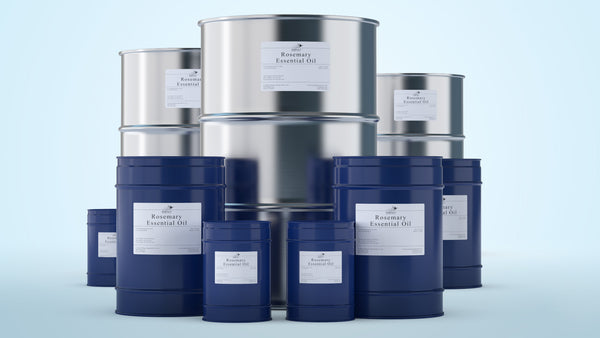
For procurement teams sourcing bulk essential oils across cosmetics, food manufacturing, and fragrance production, the certification landscape has become a critical factor in vendor selection. As the global essential oils market surpasses $13 billion and regulatory scrutiny intensifies across every major end-use sector, buyers can no longer treat certifications as optional extras. Whether you are evaluating USDA certified organic essential oils for a clean-beauty line or verifying GMP compliance for a food-grade formulation, understanding what each certification actually requires - and which ones matter for your specific application - is the difference between a reliable supply chain and a costly disruption.
This guide breaks down the certifications that B2B buyers encounter most frequently, explains what each standard demands from suppliers, and identifies the documentation you should expect before placing a bulk order.
Why Essential Oil Certifications Matter for B2B Procurement
Certifications serve three distinct functions for B2B buyers, and confusing them leads to wasted audit cycles and misaligned vendor expectations.
Regulatory compliance is the baseline. Depending on the end product, essential oil ingredients may fall under FDA cosmetic regulations, the Dietary Supplement Health and Education Act (DSHEA), or food additive requirements under 21 CFR. Using a non-compliant ingredient does not just create a quality issue - it can trigger product recalls, import holds, or facility shutdowns. For essential oil suppliers serving multiple industries, maintaining compliance across these overlapping frameworks is a non-trivial operational commitment.
Market access is the strategic layer. Retailers and contract partners increasingly mandate specific certifications as a condition of doing business. A cosmetics brand selling through Whole Foods or Sephora will require organic certification. A food manufacturer exporting to the EU needs REACH-compliant raw materials. Without the right certifications, your product may be technically excellent but commercially locked out.
Supply chain risk mitigation is the often-overlooked benefit. Certifications like ISO 9001 and GMP signal that a supplier has documented, auditable processes. For buyers scaling production or managing multiple SKUs, this translates to batch consistency, traceable documentation, and fewer surprises during quality audits.
USDA Certified Organic Essential Oils: What the Standard Actually Requires
The USDA Organic certification is the most frequently requested credential in the essential oils market, yet it is also the most misunderstood. Not all "organic" claims carry the same weight, and B2B buyers need to distinguish between three legally defined tiers.
"100% Organic" means every ingredient, including processing aids, is certified organic. This is the highest tier and the only one that permits the USDA Organic seal without qualification.
"Organic" requires that at least 95% of ingredients by weight are certified organic, with the remaining 5% drawn from an approved list of non-organic substances. Most certified organic essential oils on the market fall into this category.
"Made with Organic" requires only 70% organic ingredients and cannot carry the USDA seal on the primary display panel. For B2B buyers developing clean-label products, this distinction matters - your end customer's marketing claims depend on the tier of organic certification your raw materials carry.
Beyond the label tiers, maintaining organic supply chain integrity requires documentation at every transfer point. Suppliers must provide organic transaction certificates, maintain lot traceability from farm to shipment, and undergo annual audits by a USDA-accredited certifying body such as QAI (Quality Assurance International). Buyers should verify that their supplier's organic certification is current and covers the specific product being purchased, not just the facility in general.
GMP, ISO, and Manufacturing Quality Certifications
While organic certification addresses ingredient sourcing, manufacturing certifications address how those ingredients are handled, processed, and packaged. For buyers sourcing wholesale essential oils at production scale, these credentials directly impact batch consistency and contamination risk.
ISO 9001:2015 is the international standard for quality management systems. An ISO-certified supplier has documented procedures for every stage of production, from raw material receiving through final shipment. For B2B buyers, ISO certification signals that the supplier can produce repeatable results - the lavender essential oil in your next order will match the specifications of the last one. It also means the supplier has a formal corrective action process when deviations occur, reducing the likelihood of recurring quality issues.
Good Manufacturing Practices (GMP) focus specifically on facility conditions, equipment maintenance, personnel training, and contamination controls. In essential oil production, GMP compliance means extraction equipment is regularly calibrated, storage conditions maintain ingredient integrity, and cross-contamination between batches is prevented through documented cleaning protocols. For buyers of pharmaceutical grade essential oils or cosmetic grade essential oils, GMP compliance is often a prerequisite rather than a differentiator.
FDA registration applies to facilities manufacturing essential oils intended for use in cosmetics, food, or dietary supplements. While the FDA does not "approve" essential oils, it does require facility registration, adherence to labelling regulations, and compliance with current Good Manufacturing Practice (cGMP) requirements under 21 CFR Part 117 for food and 21 CFR Part 211 for drugs. Buyers should confirm that their supplier's FDA registration covers the specific product category relevant to their end use.
Testing and Documentation: GC/MS, CoA, and SDS
Certifications confirm that a supplier's systems and processes meet defined standards. Testing and documentation confirm that a specific batch of oil meets your specifications. Both are necessary; neither is sufficient alone.
Gas Chromatography-Mass Spectrometry (GC/MS) is the industry gold standard for essential oil purity verification. A GC/MS report breaks down the chemical composition of an oil sample, identifying individual constituents and their concentrations. For B2B buyers, this serves two purposes: it verifies that the oil matches its expected chemical profile (confirming authenticity) and it detects adulterants, synthetic additives, or contaminants that would compromise formulation integrity. Reputable essential oil suppliers perform GC/MS testing on every incoming batch, not just periodic samples. HBNO, for example, operates a PhD-led quality laboratory with in-house GC/MS equipment, ensuring batch-level testing rather than reliance on third-party turnaround times.
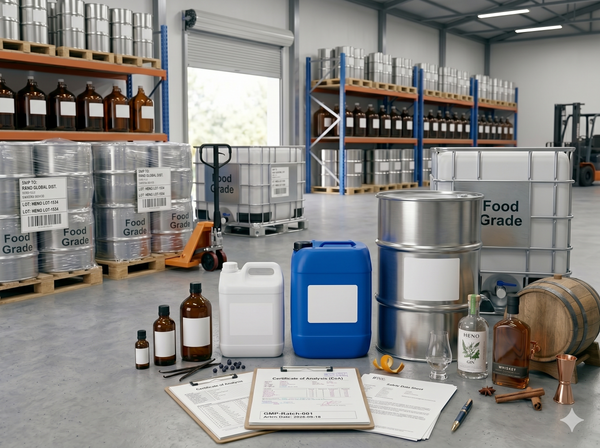
Certificates of Analysis (CoA) should accompany every shipment. A proper CoA includes the oil's botanical name, country of origin, extraction method, lot number, GC/MS results, specific gravity, refractive index, and optical rotation. Red flags include CoAs that lack lot numbers (suggesting a generic template rather than batch-specific testing), CoAs dated more than 12 months before the shipment, or CoAs that omit key chemical markers for the stated oil. Buyers purchasing high quality essential oils wholesale should request sample CoAs during supplier evaluation, before committing to a purchase order.
Safety Data Sheets (SDS) are legally required documentation that covers handling, storage, disposal, and emergency procedures for each product. While SDS documents are primarily a workplace safety requirement, they also contain information relevant to formulation - including flash points, recommended storage temperatures, and incompatible materials. For buyers managing warehouse operations or shipping essential oils internationally, current SDS documents are a compliance necessity.
IFRA, REACH, Kosher, and Certifications for Global Markets
Beyond manufacturing and organic standards, several certifications govern how essential oils can be used in specific applications or sold in specific regions.
IFRA (International Fragrance Association) Standards set usage limits for fragrance ingredients based on safety assessments. Essential oils contain natural constituents that may be subject to IFRA restrictions - citral in lemongrass oil, eugenol in clove oil, or coumarin in cinnamon oil, for example. For buyers formulating fragranced products (candles, personal care, household cleaning), IFRA compliance is essential. Suppliers should provide IFRA conformity documentation specifying which product categories each oil is approved for and at what concentration limits.
REACH (Registration, Evaluation, Authorisation, and Restriction of Chemicals) is mandatory for any chemical substance sold or used in the European Union in quantities exceeding one tonne per year. Essential oils are classified as chemical substances under REACH, meaning EU-market buyers must source from suppliers who have either registered their substances or can demonstrate compliance through their supply chain. Non-compliance can result in market exclusion - the product simply cannot be legally sold in the EU.
Kosher and Halal certifications serve buyers whose end products target observant consumer segments or institutional buyers with dietary requirements. These certifications verify that production processes, equipment, and ingredients meet the respective religious standards. While not universally required, they expand market access significantly - particularly in food, beverage, and personal care categories.
Fair trade essential oils carry certifications like Fair for Life or Fairtrade International, verifying ethical sourcing practices, fair compensation for agricultural workers, and sustainable farming methods. For brands positioning around social responsibility, fair trade certification provides third-party validation that goes beyond self-reported sustainability claims.
Evaluating Suppliers: What Certification-Driven Procurement Looks Like
Certifications are only as reliable as the supplier behind them. When evaluating essential oil suppliers for a bulk purchasing relationship, a certification-driven approach means asking specific questions beyond "are you certified?"
Request current certification documents. Certifications expire and scopes change. Ask for the actual certificate, not a claim on a website. Verify the issuing body, the expiration date, and whether the scope covers the specific products you intend to purchase.
Ask about in-house testing capability. Suppliers who rely entirely on third-party labs for GC/MS testing face longer turnaround times and may not test every batch. In-house testing - particularly when led by qualified scientists - allows for faster release, tighter quality control, and the ability to flag issues before products ship.
Confirm documentation is batch-specific. Generic CoAs, recycled SDS documents, or certifications that cover "the facility" rather than individual product lines are warning signs. Every lot you receive should have its own traceable documentation package.
Evaluate flexibility and capacity together. A certified supplier with rigid MOQ requirements or limited production capacity may not serve your needs as you scale. Look for suppliers who combine certification depth with operational flexibility - no minimum order requirements for testing new formulations, private label services for branded product lines, and production capacity that can grow with your demand.
HBNO holds ISO, GMP, FDA, Kosher, Organic, and Fair for Life certifications across its 100,000 sq ft production facility in Chico, California. With PhD-staffed quality labs, GC/MS testing on every batch, CoA and SDS documentation included with every shipment, and no minimum order quantity, the company is structured to support certification-driven procurement at any scale - from initial formulation samples to recurring wholesale essential oils contracts.
Making Certification Work for Your Supply Chain
Essential oil certifications are not a branding exercise - they are the operational infrastructure that determines whether your ingredients will pass vendor audits, meet regulatory requirements, and support the quality claims your end customers expect. The buyers who treat certification as a procurement filter rather than an afterthought consistently build more resilient, audit-ready supply chains.
Whether you are sourcing USDA certified organic essential oils for a clean-label launch, verifying IFRA compliance for a fragrance line, or qualifying a new supplier for food-grade production, the right partner provides not just the certifications themselves but the testing, documentation, and transparency to back them up.
To request a quote, product samples, or batch-specific CoA documentation, contact the HBNO team directly and reference the certifications relevant to your application.