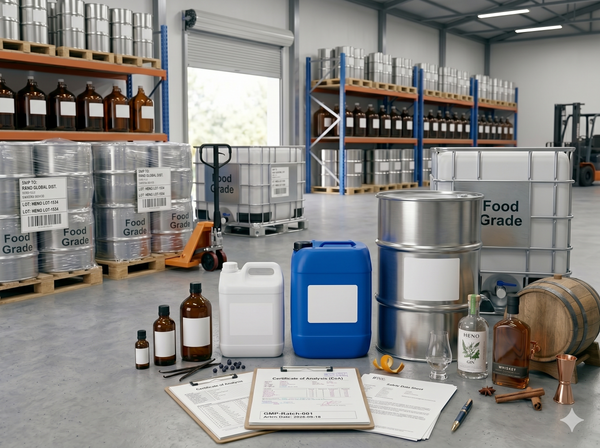
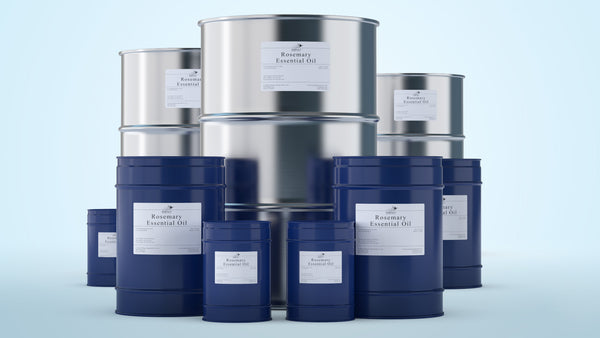
For procurement teams scaling production across cosmetics, personal care, food flavouring, and household categories, sourcing bulk essential oils at scale is rarely a single-supplier decision. The category spans dozens of botanical origins, multiple extraction technologies, and a regulatory landscape that varies by destination market. At HBNO Bulk, we work with buyers who need consistent specifications batch after batch. This guide covers the four dimensions procurement teams use to evaluate the global essential oil supply chain: origin, extraction, verification, and supplier capability.
Global Origins of Wholesale Essential Oils
Country of origin shapes chemotype, yield, and pricing for any wholesale essential oils program, and no single region dominates global supply.
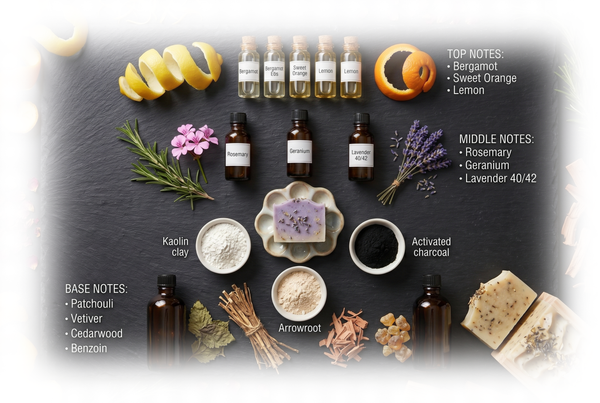
Lavender flows largely from Bulgaria and France, while Madagascar leads ylang ylang. India remains the volume centre for mint, citronella, and lemongrass. Italy and Argentina anchor citrus peel oils from cold-pressing tied to juice processing. China supplies eucalyptus and corn-mint at scale, while Morocco and Egypt produce jasmine, neroli, and rose absolutes. The global essential oils market was valued in the multi-billion range in 2024 with continued growth projected through 2030 (Source: Grand View Research). Country selection controls lead time, FX exposure, harvest seasonality, and certification options. At HBNO, our sourcing team maintains direct relationships with growers across 30-plus origins, which lets buyers lock specifications rather than accept the spot market.

Extraction Methods Behind Bulk Essential Oils
Extraction method directly determines an oil's chemical profile, yield, and application suitability.
Steam distillation accounts for the majority of global essential oil volume and remains the default for herbaceous and woody material such as lavender, rosemary, peppermint, and tea tree. Cold-pressing is used almost exclusively for citrus peel because heat destroys volatile top notes. Solvent extraction produces absolutes from delicate florals like jasmine. Supercritical CO2 extraction delivers cleaner profiles for nutraceutical and clean-label applications at higher cost per kilogram (see extraction reviews on ScienceDirect). In our facility, we run multiple extraction technologies under one roof so formulators can compare specifications without juggling several upstream contracts.
Quality Verification Standards Procurement Teams Should Demand
GC/MS analysis is the single most important quality control instrument for verifying purity in bulk essential oils.
A gas chromatography mass spectrometry report identifies every constituent in an oil and the percentage of each, letting a QC team flag adulteration, dilution, or chemotype substitution. ISO reference standards confirm whether a batch matches the expected fingerprint. Complete verification also includes refractive index, specific gravity, optical rotation, and organoleptic evaluation. Documentation should travel with the shipment: a Certificate of Analysis, Safety Data Sheet, GC/MS chromatogram, and where applicable Kosher, USDA Organic, and IFRA conformity statements (IFRA Standards). Our QC team issues a CoA and SDS with every order shipped from Chico.
Evaluating Essential Oil Suppliers Beyond Price
A reliable essential oil supplier offers verifiable quality, supply continuity, regulatory documentation, and operational flexibility, not only competitive pricing.
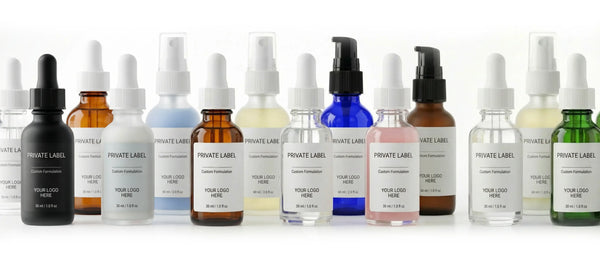
Procurement teams benchmarking essential oil suppliers should weigh manufacturing capacity, traceability to the producing region, certification scope, and QC turnaround. Volume flexibility matters: a supplier with rigid pallet minimums forces buyers to over-commit on slow-moving SKUs. Compliance posture is equally important because shipments cross REACH, FDA, and country-specific cosmetic regulation boundaries. Look for an essential oil manufacturer that publishes its testing methodology and supports finished-goods buyers and contract formulators alike. Our private label and contract manufacturing programs are built to absorb that scrutiny.

Why HBNO Supplies Procurement Teams Globally
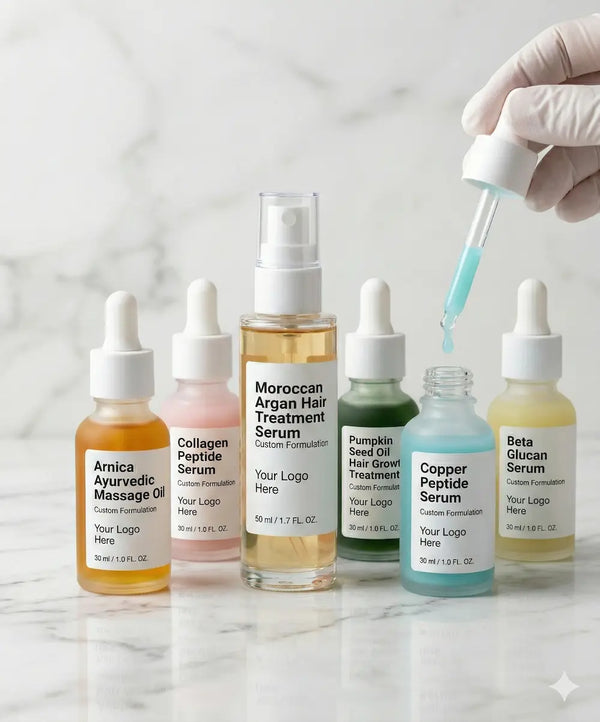
HBNO operates a 100,000 sq ft facility in Chico, California with ISO, GMP, FDA, Kosher, USDA Organic, and FAIR FOR LIFE certifications. We run GC/MS on every product, ship CoA and SDS with each order, hold no minimum order quantity, and provide up to 250,000 units per day in private label capacity, drop-shipping, and global shipping. Our PhD-led QC team handles REACH, IFRA, and GRAS compliance. Buyers can source carrier oils and USDA Organic essential oils under the same contract.
Frequently Asked Questions
What documentation should accompany every shipment of bulk essential oils?
A Certificate of Analysis, Safety Data Sheet, and batch GC/MS chromatogram should be standard. Regulated markets will also require Kosher, USDA Organic, IFRA conformity, and country-of-origin declarations.
How does extraction method affect the cost of wholesale essential oils?
Steam distillation is the most cost-efficient at scale. Supercritical CO2 extraction commands a premium because of capital intensity and lower throughput. Solvent-extracted absolutes carry higher costs because the source material is delicate and yields are very small.
Why do GC/MS reports matter when sourcing from a new essential oil supplier?
GC/MS reveals the chemical fingerprint of the oil and exposes adulteration, dilution, or substitution. Without it, a buyer is relying on label claims rather than analytical evidence, which creates regulatory and formulation risk.
Can essential oil supply fluctuate based on harvest seasons?
Yes. Most aromatic crops have annual harvests, and weather or disease can shift availability. A supplier with multi-origin sourcing and long-term grower contracts is better positioned to cover gaps than one on the spot market.
Should procurement teams require organic certification for all bulk essential oils?
Not necessarily. Organic is essential for clean-label and natural-positioned brands, but conventional grades remain appropriate for industrial cleaning, fragrance compounding, and many flavouring applications. Match the grade to the end use.
Published by the HBNO Bulk editorial team. HBNO (IL Health & Beauty Natural Oils Co., Inc.) is a manufacturer and bulk supplier of essential oils and carrier oils based in Chico, California.
Build a Bulk Essential Oils Program That Holds
Sourcing bulk essential oils at scale rewards buyers who treat origin, extraction, verification, and supplier evaluation as connected decisions. The right essential oil manufacturer documents quality, holds certifications for your end markets, and scales with your roadmap. To request specifications or pricing, contact the HBNO Bulk team.