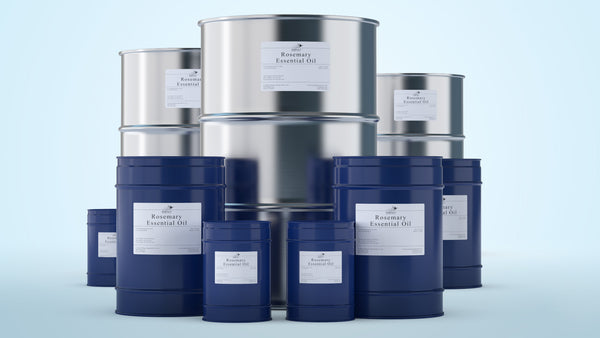
Procurement teams sourcing oregano essential oil at wholesale face wider quality variation than almost any other steam-distilled botanical. Two drums labeled "oregano oil" can carry carvacrol levels of 35% and 85%, behave differently in formulation, and serve completely different end uses. At HBNO, buyers ask the same question weekly: which carvacrol band do I actually need, and how do I read a GC/MS report to confirm it? This guide answers that for procurement managers, formulators, and contract manufacturers spec'ing oregano oil into food, fragrance, household, agricultural, and personal-care SKUs.
Why Carvacrol Drives Every Oregano Oil Spec
Carvacrol is the single chemical marker that defines commercial value in oregano essential oil. Origanum vulgare steam-distilled from carvacrol-dominant chemotypes typically falls between 60% and 85% carvacrol, with thymol, p-cymene, γ-terpinene, and trans-sabinene hydrate filling out the secondary profile (Source: ScienceDirect). The remaining 15–40% of the oil contains over thirty trace constituents — pinene, caryophyllene, linalool, borneol, geranyl acetate among them — that contribute to aroma, density, and stability.
Carvacrol concentration is driven by chemotype, geography, harvest stage, and distillation parameters. Greek mountain-grown Origanum vulgare tends to test high; cultivars from cooler Mediterranean climates lean toward thymol or linalool dominance. A supplier offering "oregano oil" without a stated carvacrol minimum is offering an undefined product. Independent third-party testing has repeatedly flagged consumer oregano oils for under-spec carvacrol; the same risk exists in bulk procurement when the PO does not specify a minimum.
In our facility we GC/MS-verify every batch of oregano essential oil and supply the report on the CoA so formulators can run the carvacrol number directly into dosing calculations.

Carvacrol Bands and What They Mean for End Use
Match the carvacrol band to the application, not to the highest available number. The market roughly segments into four bands:
|
Carvacrol Band |
Typical Profile |
Primary B2B Applications |
|
35–50% |
Lower-intensity, greener aroma; thymol or linalool may co-dominate |
Aromatic blends, herbaceous flavor, fragrance compounds |
|
50–65% |
Balanced aroma; moderate functional concentration |
Personal care, soap, surface cleaners, candle blends |
|
65–80% |
Standard food-grade and industrial spec |
Food flavoring (GRAS), animal feed additives, ingredient research, household cleaning |
|
80%+ |
Premium high-carvacrol, peppery character |
Specialty supplements, agricultural ingredient research, concentrated flavor systems |
A flavor house formulating a Mediterranean savory profile may specify 50–65% to retain herbaceous depth; an animal-feed manufacturer benchmarking against published trial data will require 65–80%. Buying 80%+ when the application calls for 60% wastes budget; buying 50% when the application requires 75% will fail spec downstream.
Bulk oregano oil buyers should also distinguish Origanum vulgare from Thymus capitatus (often labeled "Spanish oregano"), which is technically a thyme and carries a different regulatory profile under IFRA and food-flavor codes.
How to Read a GC/MS Report on Wholesale Oregano Oil
A GC/MS report on oregano oil should resolve at least the eight largest peaks and report carvacrol as a typed minimum, not just a typical value. What procurement teams should look for line by line:
-
Carvacrol — stated as ≥X% (minimum spec, not "approximately")
-
Thymol — typically 1–6% in carvacrol chemotypes; high thymol indicates a different chemotype
-
p-Cymene — biosynthetic precursor to carvacrol; 4–12% range is typical
-
γ-Terpinene — 3–10%; another carvacrol precursor
-
trans-Sabinene hydrate, β-caryophyllene, α-pinene, linalool — together usually 5–15%
-
Botanical identity confirmation — Origanum vulgare L. species verification
Our QC team at HBNO also runs refractive index, specific gravity, and optical rotation alongside the GC/MS to rule out adulteration with synthetic carvacrol or thyme oil. For customers building a dossier under FDA GRAS food-flavor pathways or REACH for European entry, this paperwork is the difference between a documented input and a rejected lot.
Conventional vs Organic Oregano Oil at Wholesale
The choice between conventional and certified organic oregano oil is driven by retail positioning and label claims, not chemistry alone. Conventional Greek and Turkish Origanum vulgare often delivers the highest carvacrol band at the lowest cost per kilogram of carvacrol, suiting private-label supplement manufacturers running cost-per-active calculations. Our organic oregano essential oil is required for finished products carrying USDA Organic, EU Organic, or clean-beauty retailer certifications.
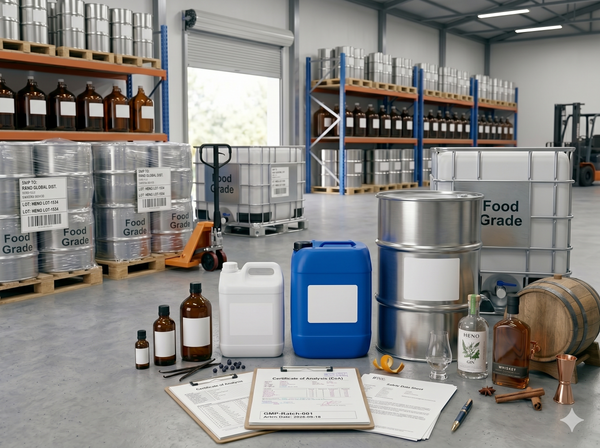
We supply both conventional and organic options with full chain-of-custody documentation. Packaging runs from 1 kg samples through 25 kg pails, 180 kg drums, and IBC totes. With no minimum order quantity, emerging brands can sample, validate, and scale incrementally.

Why HBNO for Wholesale Oregano Oil
HBNO operates a 100,000 sq ft production facility in Chico, California, with ISO, GMP, FDA, USDA Organic, Kosher, and FAIR FOR LIFE certifications. Buyers scaling wholesale oregano oil programs work with us because we offer:
-
GC/MS verification on every batch with CoA, SDS, and Kosher documentation
-
Both conventional and certified organic Origanum vulgare
-
Carvacrol typed to a stated minimum, not "approximately"
-
250,000 units/day private label bottling and packaging capacity
-
No minimum order quantity; global shipping and drop-ship available
-
REACH, IFRA, and GRAS compliance where applicable
-
PhD staff and in-house QC laboratory; long-term supply contracts
The global oregano oil market is forecast to expand through 2030, with food preservation, animal feed additives, and natural personal-care positioning driving growth (Source: Grand View Research). Buyers who lock supply early on stated carvacrol minimums protect both margin and consistency as volume climbs.
Frequently Asked Questions
What carvacrol percentage should a buyer specify in a wholesale oregano oil PO?
Specify a stated minimum, not an approximate value. Standard food and industrial grades fall in the 65–80% band; specialty applications may require 80%+. Always require the supplier to confirm the minimum on the CoA rather than using "approximately" language, since carvacrol drives both functional performance and cost-per-active.
How does Origanum vulgare differ from "wild oregano" or Thymus capitatus?
Origanum vulgare is the species most commonly distilled for high-carvacrol oregano oil. Thymus capitatus, sometimes marketed as "Spanish oregano" or "wild oregano," is botanically a thyme and produces a different chemical profile. The two carry different regulatory classifications under flavor and fragrance codes, so the species name should be confirmed on the CoA.
Is GC/MS verification standard with bulk oregano oil shipments?
Yes, with reputable wholesale suppliers. A complete GC/MS report should resolve at least the eight largest peaks, type carvacrol to a stated minimum, and confirm botanical identity. HBNO issues GC/MS results with every batch alongside the CoA and SDS.
Can a contract manufacturer substitute a 60% carvacrol oil for an 80% in an existing formula?
Not without reformulation and stability re-testing. Carvacrol concentration affects functional dosing, aroma profile, and density, so substitution typically requires re-running stability and sensory work. Lock the carvacrol band in the spec sheet at the start of formulation.
What packaging sizes are available for bulk oregano oil orders?
Standard wholesale packaging runs from 1 kg sample sizes through 5 kg, 25 kg pails, 180 kg drums, and IBC totes. Glass amber containers are preferred for sample and small-batch sizes; food-grade HDPE or stainless drums are standard for production volumes.
Published by the HBNO Bulk editorial team. HBNO (IL Health & Beauty Natural Oils Co., Inc.) is a manufacturer and bulk supplier of essential oils and carrier oils based in Chico, California.
Sourcing oregano essential oil at wholesale comes down to one question: what carvacrol minimum does the application require, and will the supplier type it on the CoA? Match the band to end use, require GC/MS on every shipment, and confirm botanical identity at Origanum vulgare. Request a quote, sample, or full GC/MS report from the HBNO team to spec the right grade for your formulation.