Procurement managers and formulators sourcing bulk eucalyptus oil encounter the same question at the point of supplier qualification: does the order specify Eucalyptus globulus or Eucalyptus radiata? The two species are often treated as interchangeable commodities, but they are not. Their constituent profiles differ in ways that determine suitability for specific manufacturing applications from respiratory wellness formulations to leave-on personal care products to household cleaning concentrates. Specifying the wrong species means the batch either underperforms on active content or creates a sensitisation risk in a leave-on application format. Getting it right begins with understanding what the GC/MS CoA should say for each species and why the difference matters for your formulation.
At HBNO, we supply both Eucalyptus globulus and Eucalyptus radiata essential oil in conventional and USDA Organic grades, GC/MS tested on every batch, from our 100,000 sq ft facility in Chico, California with CoA, SDS, and IFRA compliance documentation on every order.
The Constituent Difference Between Globulus and Radiata
The fundamental distinction between Eucalyptus globulus and Eucalyptus radiata for manufacturing applications is their 1,8-cineole (eucalyptol) content and secondary constituent profile: globulus runs 70–90% 1,8-cineole with a sharper, more penetrating character; radiata runs 60–70% with a higher relative proportion of α-terpineol and a milder, more rounded sensory profile.
Both species are steam-distilled from eucalyptus leaves and share 1,8-cineole as the dominant constituent. The clinical and commercial relevance of the difference:
|
Specification |
E. globulus |
E. radiata |
|---|---|---|
|
1,8-cineole (eucalyptol) |
70–90% |
60–70% |
|
α-terpineol |
Low |
Higher relative proportion |
|
Aroma character |
Strong, camphoraceous, medicinal |
Softer, fresh, slightly citrus-floral |
|
Skin feel (topical) |
Sharper, cooling intensity higher |
Milder, more tolerated in leave-on |
|
Primary IFRA category |
Appropriate for rinse-off and diffuser |
Appropriate for leave-on and diluted topical |
Research published in Pharmaceutics on Eucalyptus globulus bioactive extracts reports that the major compound 1,8-cineole, at non-toxic concentrations, has been studied in in vitro models related to skin research, including markers associated with cellular aging and collagen-related pathways, alongside antimicrobial and anti-inflammatory activity (Moreira et al., 2022, Pharmaceutics 14(3):582).
This provides scientific context for the use of E. globulus in cosmetic and personal care formulation discussions where constituent concentration is relevant. For leave-on personal care applications where skin compatibility is a key consideration, E. radiata is often selected due to its lower cineole content and milder sensory profile.
The global essential oils market was valued at USD 18.58 billion in 2025 and is projected to reach USD 31.27 billion by 2031 at a CAGR of 9.07%, according to Mordor Intelligence's Essential Oils Market Report. Eucalyptus oil is among the fastest-growing segments within this expansion, with 11.24% projected CAGR driven by demand in pharmaceutical, personal care, and household cleaning applications precisely the three categories where the globulus/radiata specification decision matters most.

Which Species to Specify for Which Manufacturing Application
The species selection decision maps directly to application type: E. globulus is the default specification for industrial cleaning, diffuser concentrates, and fragrance applications where maximum 1,8-cineole delivery is the goal; E. radiata is the specification for leave-on personal care, massage, and formulations destined for sensitive skin or child-accessible products.
Manufacturing applications where E. globulus is the correct specification:
-
Surface cleaning and household cleaning concentrates: Higher 1,8-cineole content (70–90%) is relevant for surface fragrance performance and formulation efficiency in rinse-off cleaning systems. The sharper sensory profile is acceptable in rinse-off or diluted aqueous/surfactant systems. Standard inclusion rate: 0.5–3% in a surfactant/water system.
-
Diffuser and room fragrance concentrates: The high cineole content and bold camphoraceous note of globulus are what the aromatics and home fragrance category market expects. No skin contact limits the IFRA restriction applicability.
-
Shower steamers and bath/shower products: Rinse-off contact limits sensitisation risk; the bold aromatic profile of E. globulus provides a stronger sensory impact at lower inclusion rates than E. radiata.
-
Oral care (mouthwash, toothpaste): 1,8-cineole is an established oral care flavor systems; FEMA/GRAS documentation supports food-adjacent use. High cineole content drives efficacy at lower inclusion percentages.
Manufacturing applications where E. radiata is the correct specification:
-
Leave-on personal care formulations: Serums, body lotions, facial creams, and topical wellness products designed for extended skin contact. Radiata's lower cineole loading (60–70%) reduces the sensitisation risk associated with leave-on cineole exposure, particularly for sensitive skin positioning.
-
Massage oil blends and body care: The softer, more rounded aroma profile integrates more naturally into multi-ingredient fragrance blends. Direct skin contact at massage oil dilution rates (typically 1–3% in a carrier) is better tolerated with radiata than globulus.
-
Child-accessible personal care and family wellness products: Where the finished product may contact children's skin or be used in environments where fragrance intensity must be moderated, radiata's milder profile is appropriate.
-
Natural insect repellent (personal care, leave-on): The lower cineole intensity makes radiata more suitable for topical leave-on repellent formulations than globulus.
In our experience working with personal care formulators, the most common misspecification we see is globulus used in a leave-on serum or massage blend where the sensory performance acceptable in R&D becomes a consumer complaint at scale. The CoA makes the species and cineole content transparent; using it to drive species specification rather than defaulting to the lower-cost option prevents reformulation cost later.

HBNO's Bulk Eucalyptus Oil Supply Credentials
HBNO supplies both Eucalyptus globulus and Eucalyptus radiata essential oil in conventional and USDA Organic grades, GC/MS tested on every batch, from our ISO, GMP, FDA, Kosher, and USDA Organic certified facility in Chico, California with CoA, SDS, and IFRA compliance documentation on every shipment and no minimum order quantity.
Key supply specifications:
-
Bulk eucalyptus globulus essential oil (Eucalyptus globulus, CAS 8000-48-4, South Africa, steam-distilled) 1,8-cineole 70–90%; GC/MS tested; Kosher, IFRA compliant; cosmetic grade; appropriate for cleaning, diffuser, oral care, and wash-off formulations
-
Organic eucalyptus globulus essential oil USDA Organic, GC/MS tested; for brands requiring organic certification on the finished label in cleaning, wellness, or personal care applications
-
Eucalyptus radiata essential oil (Eucalyptus radiata, CAS 92201-64-4, Australia/South Africa, steam-distilled) 1,8-cineole 60–70%; GC/MS tested; IFRA compliant; appropriate for leave-on personal care, massage, and formulations requiring a milder cineole loading
Our PhD-led quality control team tests every production lot in our in-house laboratory. Both species are stocked concurrently so your procurement team can qualify a two-species supplier relationship and switch grades without re-qualifying a new supplier.
Supply capacity:
-
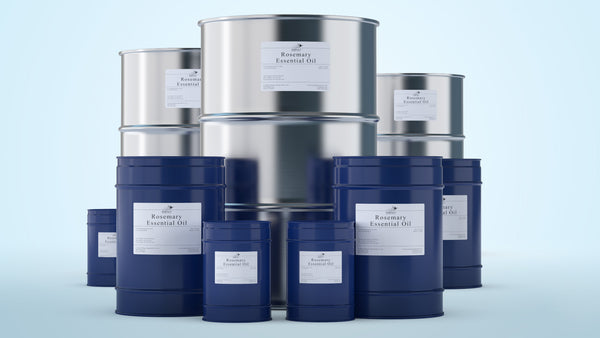
No MOQ sample volumes through 25 kg containers and drum quantities
-
250,000 units/day private-label production capacity for finished personal care and household product SKUs
-
Global shipping to North America, Europe, Asia, Oceania; drop-shipping available
-
Long-term supply agreements for volume allocation
Browse our full USDA Certified Organic Essential Oils collection for organic eucalyptus grades and companion essential oils.
FAQ
What 1,8-cineole percentage should manufacturers specify for bulk Eucalyptus globulus versus Eucalyptus radiata?
For Eucalyptus globulus, the commercial specification is 70–90% 1,8-cineole; the ISO 770 standard for pharmaceutical-grade eucalyptus oil sets a minimum of 80%. For Eucalyptus radiata, the typical commercial range is 60–70% 1,8-cineole with a higher α-terpineol fraction. Both species should have their cineole content documented on the GC/MS CoA species name alone is insufficient for formulation qualification. HBNO issues constituent-level CoAs on every production lot.
Can both eucalyptus species be used in leave-on personal care formulations?
Eucalyptus radiata is the appropriate default for leave-on personal care formulations. Its lower 1,8-cineole loading (60–70% versus 70–90% for globulus) reduces sensitisation risk in extended skin-contact applications. Eucalyptus globulus can be used in leave-on formulations at very low inclusion rates (typically ≤0.5%), but radiata provides a greater safety margin at the inclusion rates that deliver meaningful sensory performance. Always consult your IFRA compliance file and relevant regulatory bodies for your specific formulation and target market.
Is HBNO's bulk eucalyptus oil suitable for oral care manufacturing?
Yes. HBNO's Eucalyptus globulus essential oil carries FEMA/GRAS approval and Kosher certification, supporting use in oral care products (mouthwash, toothpaste, breath fresheners). 1,8-cineole is an established oral care active with well-documented breath-freshening properties. Dual food-grade and cosmetic-grade documentation is included in the standard CoA package. Always consult relevant regulatory bodies for compliance requirements in your target market before making label claims.
How does HBNO ensure cineole content consistency across eucalyptus bulk orders?
GC/MS analysis is run on every production lot at our in-house laboratory. The constituent profile including 1,8-cineole, α-terpineol, and secondary monoterpenes is documented on the batch-specific CoA. For accounts on long-term supply contracts, we can issue a master constituent specification document that defines the committed cineole band for all future deliveries, so your QA team has a contracted reference standard, not just a historical average.
Can HBNO supply eucalyptus oil as part of a private-label finished cleaning or personal care product?
Yes. Our private label services cover ingredient sourcing, GC/MS testing, formulation, filling, and branded packaging for household cleaning, personal care, and related consumer product lines . Our 250,000 units per day production capacity at our Chico facility supports both cleaning concentrate formats and personal care SKUs under your brand, using constituent-verified eucalyptus oil from our own tested inventory.
Published by the HBNO Bulk editorial team. HBNO (IL Health & Beauty Natural Oils Co., Inc.) is a manufacturer and bulk supplier of essential oils and carrier oils based in Chico, California.