The global organic soap market is projected to reach USD 4.97 billion by 2034 at a CAGR of 7.96% (Fortune Business Insights, Organic Soap Market), and natural fragrance is now one of the top three purchase drivers in the category. For contract manufacturers, private label brands, and formulators moving beyond artisan batches, that growth comes with a harder set of procurement problems: sourcing essential oils for soap making at a commercial scale without sacrificing scent accuracy, batch-to-batch repeatability, or IFRA compliance. At HBNO, we supply soap formulators working across every scale, from pilot runs to full production lines, and the pattern is consistent: usage rates, scent retention, and supplier reliability are what separate a profitable SKU from a scent-faded return.
How Much Essential Oil Belongs in a Soap Formulation
For most cold process and hot process soap formulations, essential oils should be dosed at 3 to 6 percent of the base oil weight, with final limits set by IFRA Category 9 restrictions on each specific oil.
Soap is classified under IFRA Category 9, which covers rinse-off cleansers and body washes. Because fragranced ingredients contact bare skin, maximum usage levels are stricter than those allowed in candles or diffusers. The IFRA Standards set ingredient-specific ceilings based on sensitisation, phototoxicity, and aggregate exposure data, so a per-oil review is mandatory before locking in a production formula.
In practical terms, soapmakers typically calculate fragrance load against the base oil weight rather than total batch weight. A starting dose of 0.5 oz of essential oil per pound of base oil is standard for a light scent, moving up to 1 oz per pound for a strong scent on oils with favourable IFRA ceilings (lavender, litsea cubeba, peppermint). High-sensitiser oils such as clove, cinnamon bark, and some citrus chemotypes must be capped far lower. In our experience supporting private label soap brands, getting this calculation right on the lab formula is the single biggest driver of whether the production version smells the same six months later.

Why Soap Fragrances Fade and How Manufacturers Prevent It
Scent fade in finished soap is driven by essential oil volatility, saponification chemistry, and cure-time evaporation, and it is controlled through note blending, anchor oils, and fixative additives rather than simply higher dosing.
Most essential oils are dominated by monoterpenes and other volatile components with low flash points. Eucalyptus globulus has a flash point near 118 to 120°F, and gel-phase temperatures inside a cold process loaf can climb above 160°F, which drives off top notes before the bar even demolds. Saponification itself alters some aromatic molecules, so the cured bar rarely smells identical to the raw oil.
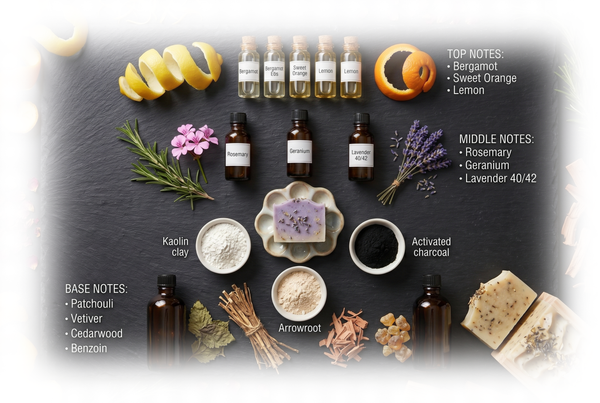
Production formulators counteract this with three levers. First, blend composition: pairing a volatile top note like bergamot or sweet orange with middle notes (rosemary, geranium) and base notes (patchouli, vetiver, cedarwood) extends perceived longevity. Second, anchor oils: litsea cubeba holds citrus character far better than lemon alone, and benzoin or peru balsam acts as a natural fixative. Third, powder fixatives: kaolin clay, arrowroot, and activated charcoal adsorb volatile components and slow release during use. From our facility in Chico, we often recommend soap manufacturers request a bulk lavender essential oil with standardised linalool and linalyl acetate ratios (such as Lavender 40/42) because the consistent chemistry translates directly into consistent scent retention across production batches.
Scaling From Lab to Production: Essential Oil Sourcing Challenges
Scaling a soap formulation from pilot to production depends less on the recipe itself and more on whether the supplier can deliver the same essential oil specification, batch after batch, at commercial volume.
A lab formula developed with a 500 ml sample is trivial to replicate. The same formula run at 500 kg, then repeated quarterly, exposes every weakness in the supply chain. Four issues recur with soap manufacturers we work with:
-
Chemotype drift: peppermint, rosemary, and tea tree vary in marker compound levels between origins and harvests, which shifts scent and can push IFRA limits
-
Lead time volatility: seasonal and weather-driven shortages in regions like Bulgaria (lavender) or India (lemongrass, peppermint) can stall production if the supplier holds no domestic inventory
-
CoA and SDS gaps: missing or inconsistent documentation blocks retailer compliance audits
-
MOQ mismatches: brands scaling from 1,000 to 25,000 bars per run often hit suppliers whose minimum drum size exceeds a full year of inventory
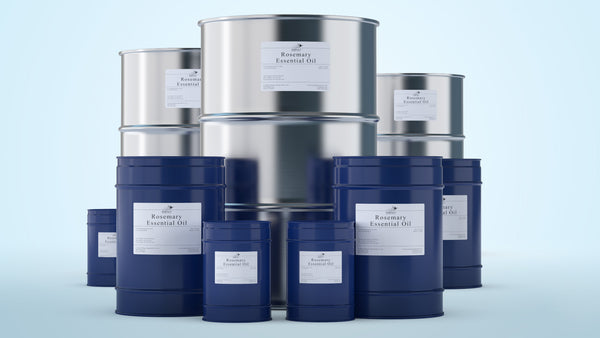
We provide a batch-specific Certificate of Analysis and Safety Data Sheet with every shipment, regardless of order size, and we hold bulk essential oils and wholesale essential oils in domestic inventory at our Chico warehouse so lead times stay predictable as our clients scale.

Why Soap Manufacturers Source Essential Oils From HBNO
HBNO is built around the specific sourcing problems soap manufacturers face at scale: no minimum order quantity, in-house GC/MS verification, domestic US inventory, and private label capacity up to 250,000 units per day.
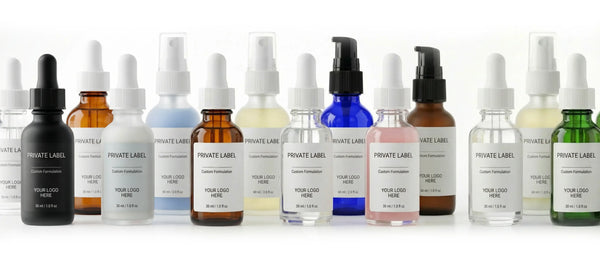
Our 100,000 sq ft facility in Chico, California operates with an in-house quality control team that runs GC/MS, organoleptic, specific gravity, refractive index, optical rotation, and flash point testing on incoming and outgoing material. Every shipment ships with a batch-specific CoA and SDS. We provide standardised soap fragrance oils and single-origin essential oils including tea tree, eucalyptus globulus, peppermint, and lemongrass. Brands needing a finished bar can use our private label and contract manufacturing service, which runs from initial consultation to delivery in approximately 4 to 6 weeks.
Frequently Asked Questions
What is the correct essential oil usage rate for cold process soap?
Most cold process formulas run essential oils at 3 to 6 percent of the base oil weight, equivalent to roughly 0.5 to 1 oz per pound of base oil. The exact ceiling depends on the specific oil and its IFRA Category 9 limit, so sensitisers like cinnamon bark and clove must be capped lower than lavender or litsea cubeba.
How do soap manufacturers prevent essential oil scent fade during cure?
The most reliable approach is blend design: combining volatile top notes with less volatile middle and base notes, anchoring citrus with litsea cubeba, and adding natural fixatives such as benzoin, patchouli, or powdered clay. Higher dosing alone rarely solves fade because it can push formulas out of IFRA compliance without extending scent longevity.
Can HBNO supply the same essential oil specification across repeat production runs?
Yes. We run GC/MS testing on every incoming lot and every outgoing shipment, and we issue a batch-specific Certificate of Analysis so buyers can match current shipments to the specification used in the original lab formula. Standardised materials such as Lavender 40/42 are formulated to a fixed chemistry specifically for this reason.
Is there a minimum order quantity for bulk essential oils from HBNO?
No. We operate with no minimum order quantity on essential oils, so soap manufacturers can pull sample sizes for lab formulation and then scale up to full drums as production volumes grow. Our private label service has its own quantity tiers starting at 500 units.
Which essential oils retain scent best in cold process soap?
In our experience supplying soap formulators, the most reliable performers are lavender 40/42, litsea cubeba, patchouli, cedarwood, rosemary, peppermint (Indian and Japanese), and tea tree. Heavier base notes such as patchouli and vetiver hold up through cure and extend the longevity of lighter oils blended alongside them.
Published by the HBNO Bulk editorial team. HBNO (IL Health & Beauty Natural Oils Co., Inc.) is a manufacturer and bulk supplier of essential oils and carrier oils based in Chico, California.
Scale Your Soap Line With a Verified Essential Oil Supplier
Soap manufacturers scaling beyond artisan production need three things from an essential oil supplier: IFRA-compliant specifications, repeatable batch chemistry, and flexible order volumes. HBNO provides GC/MS-verified essential oils for soap making across every scale, with batch-specific documentation and no minimum order quantity. Request a quote or sample to discuss your formulation and production volumes with our team.